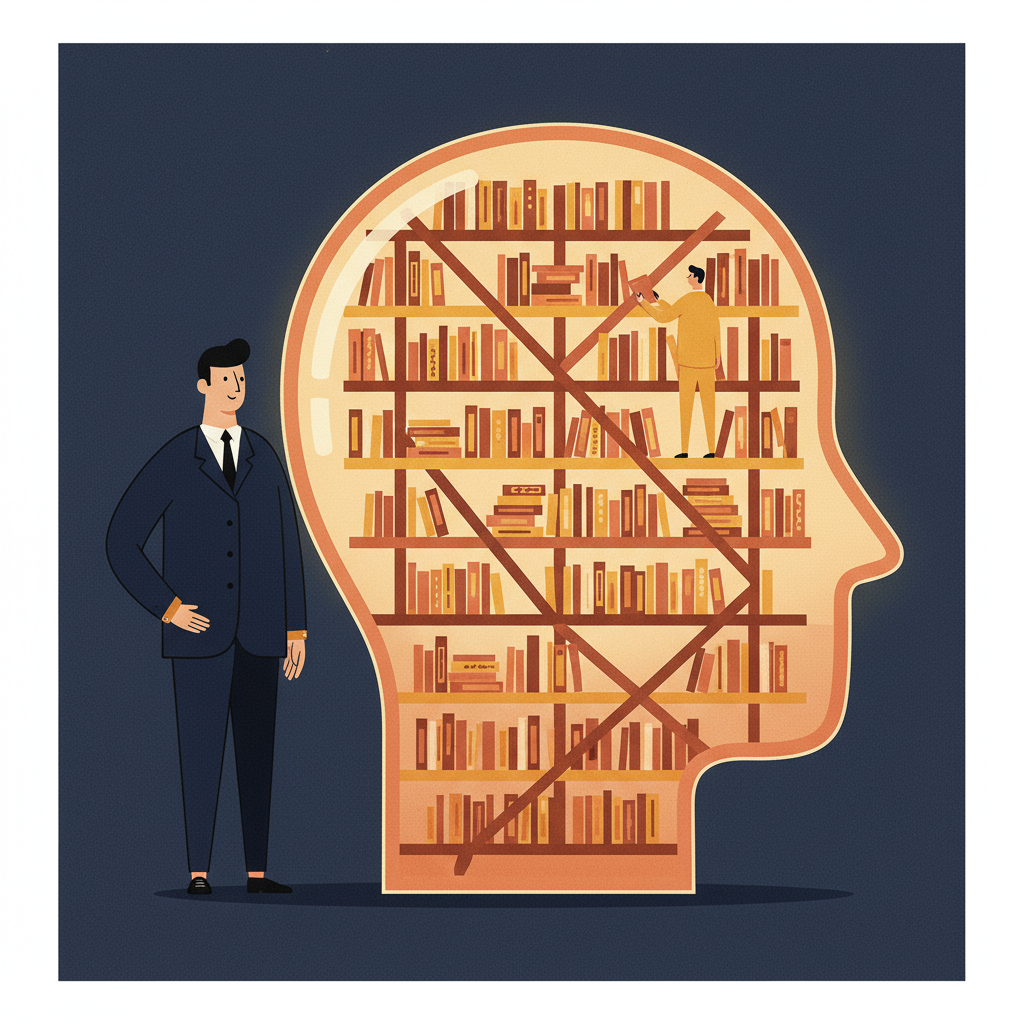
You have a career's worth of expertise that no one can access - including you.
Think about that. You spent 10, maybe 20 years building instincts no job description captures. The strategic sense that says "this positioning is wrong" before you can articulate why. The hiring judgment that reads a culture mismatch in 5 minutes flat. The product instinct that separates a retention-moving feature from a vanity metric. The clinical eye that catches a deteriorating trend three data points before the algorithm flags it.
All of it locked in your head. Impossible to sell. Impossible to scale. Impossible to deploy in more than one place at a time. You're sitting on what might be the most valuable asset in your career - and it has zero liquidity.
That is insanity.
Imagine if every instinct you've spent two decades sharpening was actually deployable. Not stored in a drawer. Not captured in a slide deck nobody reads. Actively running - in parallel, on every project that touches your domain, before you even sit down to think about it. The best version of your judgment, working everywhere it's needed, while the merely-competent version of you takes a walk. That's what financialized expertise feels like. And it's a single weekend of work away from being yours.
┌─────────────────────────────────────────────────────────────────────────────────┐
│ │
│ ● HOW MOST PEOPLE USE AI TODAY ● HOW A 100x OPERATOR USES AI │
│ │
│ You ──→ Generic Prompt ──→ Claude You ──→ Knowledge Base ──→ Claude │
│ ┌──────────────┐ │
│ "Write me a product brief" │ 12 yrs taste │ │
│ │ 200+ calls │ │
│ ↓ │ Team context │ │
│ │ Domain rules │ │
│ Generic output that └──────┬───────┘ │
│ sounds like everyone ↓ │
│ and no one. │
│ Output that sounds like you. │
│ Then you spend 45 min First draft. No rewriting. │
│ rewriting it to sound │
│ like you. That 45 min? Gone. Every time. │
│ │
│ ─ ─ ─ ─ ─ ─ ─ ─ ─ ─ ─ ─ ─ ─ ─ ─ ─ ─ ─ ─ ─ ─ ─ ─ ─ ─ ─ ─ ─ ─ ─ ─ ─ ─ ─ ─ ─ ─ │
│ │
│ CAREER IMPACT CAREER IMPACT │
│ You're replaceable. Anyone You're the person whose AI │
│ with the same prompt gets produces work no one else's │
│ the same result. can. That's a moat. │
│ 20% 100% │
│ │
│ BUSINESS IMPACT BUSINESS IMPACT │
│ AI budget producing generic Every interaction makes the │
│ output. 20% adoption. system smarter. 12-month │
│ Competitors have the same. head start no one can buy. │
│ 20% 100% │
│ │
└─────────────────────────────────────────────────────────────────────────────────┘
Think about it - you prompt Claude and get back something written for everyone and no one. You tweak. You retry. You start wondering if the $20/month is justified. It's not the tool. It's that your AI has zero access to the thing that makes you, you. The value isn't the AI alone. It's you, your knowledge store, and AI working as one system - your agents as an extension of your skills, not a replacement. You're not outsourcing your differentiators. You're financializing them. Taking expertise that was previously locked in your head - accessible only through expensive hourly billing or a full-time salary - and turning it into a reusable, deployable, compounding asset. Once you see it, the fix takes 20 minutes. And the ROI never stops.
Here is the math that should keep you up at night. If you spend 45 minutes per day rewriting AI outputs to sound like you, that's roughly 180 hours per year. At a conservative $100 per hour, you are burning $18,000 annually on the tax of generic context. Invest one weekend - call it 16 hours - encoding your expertise and that tax drops to near zero. Return on investment in week two. Everything after week two is pure compounding upside. No sane investor would turn down that trade. But thousands of knowledge workers turn it down every single day by saying "I'll get to it when things slow down." Things never slow down. That's the whole problem.
The 100x Individual
Here's the thing. You are not a generic knowledge worker. You're a specific person with specific taste, specific craft, and specific domain expertise built over thousands of reps. Until now, the only way to monetise that expertise was to sell your time - hour by hour, salary by salary, one meeting at a time. The moment you make that specificity available to AI, you stop selling time and start deploying an asset. Like going from playing poker blind to seeing your cards.
Let me show you what this actually looks like.
A product designer spent one weekend documenting her design framework - 40 principles covering user personas, information architecture, UX flow patterns, interaction design, and visual taste refined over 12 years. She connected it to Claude via MCP. Monday morning, she asked for three homepage concepts. Every single one nailed the user flow and matched her aesthetic. The "that's not how the user thinks about this" feedback loop? Dead. The 45-minute rewrite cycle? Gone. She financialized 12 years of product design judgment into a reusable asset in 8 hours. Tell me that's not leverage. Before this, the only way to access her taste was to hire her at $200/hour or bring her on full-time. Now her judgment runs in parallel across every project she touches - simultaneously. Same expertise, 10x the surface area. That's not a productivity tool. That's a new economic model for craft.
A founder encoded his fundraising context: investor preferences from 200+ pitch meetings, objection patterns, competitive positioning notes. His AI now drafts investor updates that reference the right context for each recipient. What took 3 hours per update now takes 20 minutes - and they land better because they're personalized at a level no human could sustain manually. That's not a productivity hack. That's a 9x return on 3 hours of documentation. He took expertise that used to evaporate after each conversation and turned it into infrastructure.
An engineering lead documented his team's architecture decisions, naming conventions, and the 5 things you never do in this codebase. Code suggestion acceptance went from 60% to 95%. The "fix it to match our standards" step - the one that made engineers hate AI tooling - just disappeared. His 8 years of hard-won opinions about this specific codebase? Now they're embedded in every line of code the team ships.
A clinical leader encoded her assessment frameworks and care protocols. Pre-visit prep dropped from 45 minutes to 5. Not because the AI replaced her judgment - because it eliminated 40 minutes of manual assembly before her judgment even kicked in. Her 15 years of clinical pattern recognition is now working before she even opens the chart.
A growth marketer encoded her channel-testing framework, creative scoring rubric, and the 30 experiments she's run across the last three companies. Her AI now drafts test plans that land with specificity you cannot fake. What used to be "let's try a bunch of stuff and see" became "based on your category, audience, and funnel stage, here are the three tests with the highest expected yield - and here's why the other seven would waste budget." Her CAC improvements aren't coming from better creative. They're coming from never running a low-expectation test again. That's not a prompt hack. That's the compounding weight of 300 past experiments, always at her fingertips.
A product analyst encoded her investigation playbook - the 12 questions she always asks when a metric moves, the funnel patterns she's seen a hundred times, the biases she's learned to watch for. Now when a KPI drops, her AI starts the investigation with the same rigor she'd bring in person. The stakeholder gets a preliminary hypothesis before the slack thread cools down. She used to be the bottleneck on every investigation. Now she's the editor on the ones that matter.
What's stopping you from taking a single Saturday afternoon to do this for one slice of your expertise? Not skill - if you can write a doc, you can build a knowledge base. Not money - the tools are essentially free at the individual level. The blocker is almost always the false sense that "my expertise isn't documented enough yet to encode." That's backwards. The expertise gets sharper THROUGH documentation, not after it. You don't write the doc when your thinking is perfect. You write the doc and your thinking becomes perfect. Start ugly, start incomplete, start now.
The investment is roughly 20 minutes per knowledge area. Document one domain of your expertise. Connect it. Test it. The first time your AI returns something that sounds like you - not like the median internet response - you'll understand the difference between using AI and deploying it.
How to do this right now: Open Claude.ai → click "Projects" in the sidebar → create a new Project → add your expertise docs, frameworks, or past work as Project Knowledge. That's it - every conversation inside that Project now draws from your context. Want to go further? Connect your Notion workspace, Confluence pages, or Google Docs to Claude via MCP (Model Context Protocol) so your knowledge base stays live and current without manual uploads. And here's what changes beyond the output quality: you get time back. Not just for shipping more - for the deep thinking, deep craft, and hardest most interesting problems in your domain. The 45-minute rewrite cycle you eliminated? That's time for the strategic work, the creative work, the work that actually makes a difference. Time to decision, faster. Time to idea, faster. Time for the work only you can do? Unlocked. Net-net: 20 minutes of input, years of compounding output - and years of reclaimed hours for the work that really matters.
Here's where the compounding gets wild. Every customer call you summarize and deposit, every design decision you record, every technical constraint you document, every clinical protocol you encode - it makes tomorrow's output measurably better than today's. After 6 months, your AI has context that would take a new hire a year to absorb. After 12 months, you've built career capital that no layoff, no reorg, no market shift, and no competitor can touch.
The punchline is: you just changed the economics of your own expertise. Before, your knowledge was illiquid - trapped in a format (your brain) that could only be accessed one conversation at a time, one meeting at a time, one deliverable at a time. Now it's liquid. Deployable. Working while you sleep, compounding while you think about the next problem. You didn't just get more productive. You financialized your career.
You become the person whose AI produces work that's unmistakably theirs. Everyone else is still getting the same generic output from the same generic prompts. That gap widens every single day. And it's a gap you can never close by working harder - only by starting sooner.
The 100x Team & Business
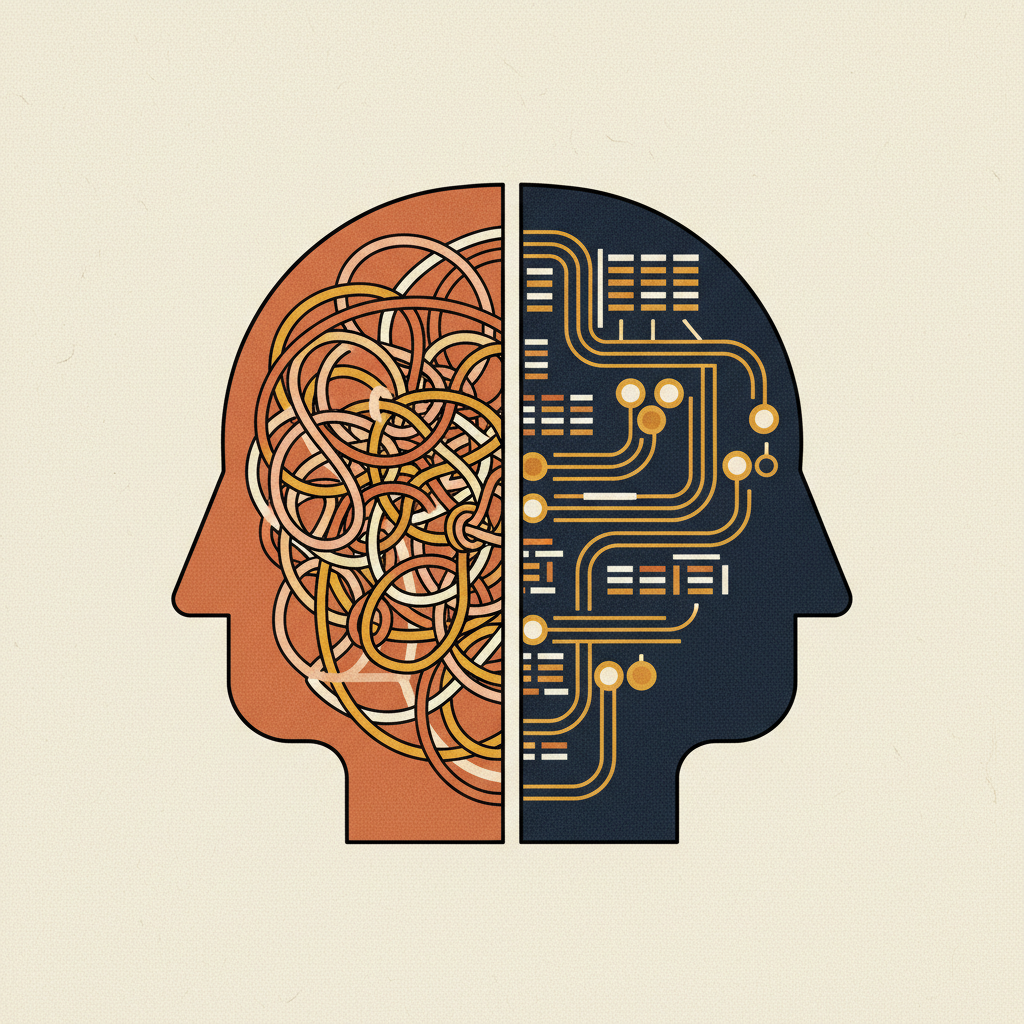
Your company bought AI licenses for the whole team. Adoption stalled at 20%. That's $480 per seat per year producing essentially zero ROI. The people who do use it start every interaction from scratch - like a quarterback calling a play with no knowledge of the defense. The PM's prompt doesn't know about engineering's constraints. The product designer's prompt doesn't reference the persona research or IA patterns from previous projects. The ops leader's workflow AI doesn't know about the clinical protocols. Each person is building on sand while your organizational intelligence sits scattered across 40 Notion pages, 12 Slack channels, and somebody's head.
The punchline is: the fix isn't better prompts. It's a shared knowledge base that every team member - and every AI agent - draws from. One investment. Unlimited compounding.
One company built this in Notion and connected it via MCP - you can do the same in under an hour: install the Notion MCP server, authorize your workspace, and Claude can read and query every page your team maintains. Customer calls flow through Granola, get synthesized, and deposit key evidence into a structured knowledge base. Next time anyone on the team needs context - the PM needs competitive positioning, the product designer needs user research and IA precedents, the engineer needs business context for a technical decision, the clinical team needs updated protocols - the foundation is already there. Simple prompts produce excellent output because the accumulated context does the heavy lifting. That is the definition of scale economics applied to knowledge work. And the time people reclaim from context assembly? It goes to the work that actually makes a difference - deep strategic thinking, hard problems worth solving, the craft that no amount of throughput can replace.
Here's the thing about compounding at the team level - it turns this from a tool into a genuine moat. When the sales team's call notes enrich the same knowledge base that product uses for prioritization, information flows without meetings. When engineering's technical constraints live in the same system the product designer queries, technically impossible solutions and misguided UX flows stop getting proposed. When clinical protocols update in the same base that operations routes from, care coordination happens at system speed. Every silo you collapse is a meeting you kill. Every meeting you kill is 6 hours of salary cost per week you redeploy to actual work.
Run the numbers at a 50-person company with a fully-loaded cost per seat of $180K. If every employee loses even 30 minutes per day to context-hunting - searching for the right doc, re-asking a question answered last month, rebuilding analysis someone else already did - that's 125 hours per day of wasted time across the team. Annualized, that's roughly $2.9M in salary spent on pure context friction. A proper knowledge base cuts that in half within 90 days. You've just recovered $1.4M per year without hiring a single person or changing a single tool. That's not an AI story. That's a basic infrastructure story most companies refuse to tell their CFO because they'd have to admit how much value they've been quietly bleeding.
The adoption gap closes because the barrier drops. People who struggled with "what do I even prompt?" now get useful output on the first try. The knowledge base is the onramp that makes AI accessible to the 80% who gave up. That's the unlock that takes your AI spend from cost center to force multiplier.
Think about it like this. A franchise restaurant doesn't win because every employee is a master chef. It wins because the operating manual carries the master chef's judgment to every kitchen, every shift, every plate. Your knowledge base is the operating manual for your expertise. Without it, every team member is improvising. With it, every team member is executing your best thinking - even when you're not in the room, even when they're new, even when the question is one you've answered a thousand times. That's not just leverage. That's the difference between a team that scales and a team that stalls.
After 12 months, this becomes a competitive moat competitors literally cannot replicate. They can buy the same models. They can buy the same tools. They cannot buy your people, your 12 months of curated organizational intelligence, and the compound loop between the two. Every interaction your team has makes the system smarter - and the system makes your team sharper. The gap widens daily. That's how you win - not by having better technology, but by having better people empowering better agents through better context. Your team isn't outsourcing its intelligence to AI. It's extending its intelligence through AI. Read the table, not the cards.
The Pattern Hides in Plain Sight

That's the wrong question - "does this work in my domain?" The right question is: "why would structured knowledge not compound in any domain?"
Two things are happening. First: information locked in heads or scattered across tools is invisible to AI. Second: the moment you structure it and make it available, the ROI manifests immediately. This works identically across domains that look nothing alike - because the underlying economics are universal. Compounding doesn't care about your industry.
A clinical care coordinator encoded patient assessment frameworks into a knowledge base. Her AI now pre-assembles context before each review - pulling history, flagging trends, surfacing decision-relevant data. Prep time dropped from 45 minutes to 5. Not because the AI replaced her clinical judgment, but because it eliminated the manual assembly before her judgment. An 89% reduction in prep time. Every single day.
A solo founder encoded everything - pitch learnings, customer discovery notes, architecture decisions, market research. She describes it as having a business partner with perfect memory and zero ego. The AI doesn't make her decisions. It ensures she never wastes 20 minutes re-finding her own previous thinking. Over a year, that's roughly 170 hours recaptured - the equivalent of adding a month to her calendar.
A product manager encoded competitive positioning, user research, and feature performance data. Sprint planning went from "let me pull up six dashboards" to "here's what the knowledge base surfaces about this feature area." Context assembly time dropped 80%. Same person. Same tools. Completely different output. The only variable that changed was the quality of the context layer.
A design engineer connected his component library, design tokens, and brand guidelines. When he asks for a component, the AI uses his actual system with his actual constraints. The translation step from generic patterns to his reality - the one that ate 30 minutes per component - gone.
An operations leader encoded care coordination protocols, vendor relationships, and escalation logic. New hires' AI assistants answered operational questions with specificity that used to require 3 months of shadowing. Institutional knowledge stopped walking out the door every time someone quit.
A VP of customer success encoded her playbook for spotting churn 90 days before renewal. The 14 signals she watches for. The 6 intervention patterns that actually work. The 20 customer archetypes she's seen across a decade of enterprise accounts. Her team's AI now flags at-risk accounts automatically and drafts the first-pass save play before a human even notices the trend. Net revenue retention moved from 108% to 121% in two quarters. Not because she hired better CSMs. Because her pattern recognition started working on every account in parallel, instead of only the ones she personally reviewed.
A head of recruiting encoded his interview rubrics, the warning signs he's learned to spot in resumes, and the 25 technical questions he's calibrated across hundreds of interviews. His team's AI pre-screens candidates against his actual judgment, not some generic ATS scoring algorithm. Top-of-funnel quality jumped 40% and his recruiters stopped burning time on candidates who were never going to pass the final round. He effectively put himself into every recruiter's first call without attending a single one.
Picture this. A new hire joins on Monday. By Wednesday, her AI knows your customer base, your engineering constraints, your design language, your clinical protocols, your operational history. Not because she memorized any of it - because the system carries it. By Friday, her output reflects judgment that took her colleagues five years to build. That's not onboarding. That's teleportation. And the only thing standing between you and that reality is the time it takes to start writing things down in a place AI can read.
What's stopping you from starting this weekend? Not skill. Not money. Not even time - you already waste more time per week on generic-prompt rewrites than it takes to encode your first knowledge area. The real blocker is almost always a story you tell yourself: that your expertise is "too tacit to document," or "too context-dependent to generalize," or "not ready yet." Every version of that story is false. Every hour you spend writing down what you actually think is an hour that compounds for the rest of your career. And every hour you don't is an hour someone else in your field is using to pull ahead.
Different domains. Same pattern. Same economics. The moat isn't the knowledge base alone - it's the triad: you, your knowledge store, and AI working together. Your agents build with you, as an extension of your skills. You're not handing off your expertise - you're amplifying it. Let me be very clear: there is no version of the future where unstructured expertise beats structured expertise deployed through AI by the person who earned it. None.
Where This Connects
Knowledge management isn't one idea among five. It's the foundation the other four build on - and that distinction matters more than most people realize.
Your architecture needs a knowledge layer to orchestrate intelligently. Your workflow engine needs context to route work with the right information attached. Your AI-native team needs shared context to close the adoption gap. Your performance standards depend on AI that produces work worth measuring. Remove the knowledge layer and every other pillar collapses.
Think of it like the foundation of a skyscraper. You cannot add floors later if the foundation wasn't built to carry them. The same is true of your AI strategy. Teams that try to orchestrate sophisticated multi-agent workflows on top of a thin context layer end up rebuilding the foundation later - and paying twice for the privilege. The teams that invest in knowledge first find that every subsequent layer becomes dramatically cheaper to build, because the hardest work - capturing the implicit judgment that makes your team specific - is already done.
Every pillar feeds knowledge back into the base. Every improvement to the base improves every pillar. This is the compounding loop that separates the 1% from everyone else using the same tools. The game isn't who has the best AI. It isn't even who has the best knowledge base. The game is who has the best people empowering the best agents through the best context - all three working as one system. Full stop.
Examples How Others Have Made This Real
These aren't hypotheticals. Real builders and companies are turning knowledge bases into compounding AI infrastructure - and the tools to do it are available today.
Notion + MCP - teams connect their Notion workspace to Claude via the Model Context Protocol. Customer research, product decisions, engineering constraints - all queryable by AI in real time. The "let me find that doc" tax drops to zero because the AI already has it. Thousands of teams are running this exact setup right now.
Granola captures meeting context automatically - call notes, decisions, action items - and deposits them into a structured knowledge base. No extra work. No "remember to take notes." The context accumulates as a byproduct of normal work, which is the only way knowledge management actually sticks.
Rewind (now Limitless) records and indexes everything you see and hear on your machine. The knowledge base builds itself. When you ask "what did Sarah say about the pricing model last Tuesday?" - the answer exists because the system captured it without you lifting a finger.
Cursor + codebase indexing - engineering teams point Cursor at their entire repo and it builds a knowledge layer automatically. Architecture patterns, naming conventions, shared utilities - the AI learns your codebase reality by reading it, not by someone documenting it manually. The 60%-to-95% acceptance rate jump starts with letting the tool see your actual code.
Stripe's internal knowledge platform connects API documentation, engineering decisions, and incident postmortems into one queryable system. When an engineer asks "why does this endpoint work this way?" - the AI references the actual decision and the reasoning behind it, not a generic Stack Overflow answer.
Amazon's "working backwards" documents have been structured knowledge assets for decades - but teams that now feed them into AI tools get a compounding advantage. The AI references the customer letter, the FAQ, and the press release when generating product strategy. Twenty years of institutional judgment, now liquid and deployable.
Linear + Slack + Claude - product teams connect their issue tracker and communication channels to AI via integrations. When the PM prompts for sprint priorities, the AI already knows the backlog, the recent conversations, and the customer feedback without anyone copy-pasting a thing.
Ask Yourself
Before you move on, sit with these. They'll tell you exactly where you stand - and where the leverage is hiding.
Where does your expertise actually live right now? Is it in your head, scattered across Slack threads, buried in old docs - or structured in a place AI can access? If your AI can't draw from your best thinking, it's working with one hand tied behind its back. See how the knowledge moat works →
What's your current AI-accessible knowledge store? Open Claude right now and ask it something domain-specific about your work. Does it nail it - or does it give you the median internet answer? That gap is the measure of how much of your expertise is still invisible. Explore how agents use your knowledge →
How much time do you spend re-teaching AI what you already know? Every prompt where you re-explain your context, your constraints, your preferences - that's the tax on undocumented expertise. Document once, compound forever.
Can your team's AI access each other's knowledge? When the PM prompts, does the AI know about engineering's constraints? When the product designer prompts, does it reference the persona research and UX patterns? If everyone's AI starts from zero, you've got individual tools - not a system. See how shared surfaces connect teams →
What would a new hire's AI know on day one? If the answer is "nothing about how we actually work here" - you don't have institutional memory. You have institutional amnesia with good intentions. Explore the full framework →
What's your 20-minute investment? Pick one domain of your expertise right now. What would you document first? That's the one that's costing you the most every time you prompt without it.