Taste is intellectual capital. You spent a decade accumulating it - pattern recognition, quality thresholds, decision frameworks - and right now you're letting it sit in a zero-yield account. You ask AI to draft a product strategy memo and it comes back sounding like a McKinsey intern who's never had a conviction in his life. Structurally competent. Generically correct. Missing every opinion that makes your thinking worth paying for.
Here's the thing. The AI isn't broken - it's uninformed. It has zero access to the decades of compounded judgment that make your work yours. That's not a prompt problem. That's a capital deployment problem. And the fix isn't handing your judgment to AI - it's empowering AI to work as an extension of your judgment. You, your knowledge store, and AI working together. That's the triad. That's where the value lives.
Your taste isn't aesthetics. It's intellectual capital across every domain where you hold earned opinions - strategy, hiring, product direction, brand voice, pricing, org design, positioning. None of it reaches your AI right now. You are sitting on a pile of undeployed assets. That is insanity.
Put a dollar value on it. Your judgment on a single pricing decision might be worth $500k to your company over 3 years. Your hiring instinct saves $200k every time it prevents a bad senior hire from being made. Your strategic read on a market shift might be worth the entire quarter's revenue. Each one of those judgments is a high-IRR asset that you currently deploy maybe a dozen times a year. Deploy it 200 times a year through AI and the math gets absurd fast. This is the single largest undervalued asset on your personal balance sheet - and the cost of unlocking it is a 90-minute writing session. There has never been an ROI curve this steep on any investment in any professional's career. Ever.
Imagine if every draft you got back already sounded like you. Your framing, your priorities, your specific way of cutting through noise. The 45 minutes you spend making AI output sound like something you'd actually send - gone. Not because you're prompting harder, but because your judgment is finally in the room. What's stopping you from making that real this week?
┌─────────────────────────────────────────────────────────────────────────────────┐
│ │
│ ● AI WITHOUT YOUR TASTE ● AI CARRYING YOUR TASTE │
│ │
│ Your prompt: Your prompt: │
│ "Draft a product strategy" "Draft a product strategy" │
│ │
│ ↓ ↓ │
│ ┌──────────────────────┐ │
│ AI draws from: │ YOUR TASTE DOC │ │
│ The entire internet. │ │ │
│ Everyone's opinions. │ "Lead with customer │ │
│ No one's judgment. │ pain, not TAM" │ │
│ │ "Kill features that │ │
│ ↓ │ don't move retention│ │
│ │ within 2 sprints" │ │
│ Output: │ "Pricing: value-based│ │
│ McKinsey intern's first │ never cost-plus" │ │
│ attempt. Structurally └──────────┬───────────┘ │
│ competent. Missing every ↓ │
│ opinion that makes your Output: │
│ thinking valuable. Sounds like you wrote it. │
│ Your framing. Your opinions. │
│ Tax: 45 min rewriting. Your quality bar. First draft. │
│ Every. Single. Time. Tax: 0 min. Judgment only. │
│ │
│ ─ ─ ─ ─ ─ ─ ─ ─ ─ ─ ─ ─ ─ ─ ─ ─ ─ ─ ─ ─ ─ ─ ─ ─ ─ ─ ─ ─ ─ ─ ─ ─ ─ ─ ─ ─ ─ ─ │
│ │
│ CAREER IMPACT CAREER IMPACT │
│ Your AI sounds like everyone Your AI sounds like you. │
│ else's. Your judgment is Taste compounds. After 6 mo, │
│ invisible. You're a prompt your AI carries judgment a │
│ operator. new hire needs a year to get. │
│ │
│ │
│ BUSINESS IMPACT BUSINESS IMPACT │
│ Team quality depends on who Taste scales without bottlenecks. │
│ reviews it. Founder becomes New PM's first brief matches │
│ the bottleneck. the org's quality bar. Day one. │
│ │
│ │
└─────────────────────────────────────────────────────────────────────────────────┘
The 100x Individual
Taste is judgment compressed into instinct. Three components, each one a form of intellectual capital:
- Pattern recognition - you've seen enough reps to know what works before you can prove it
- Quality thresholds - you hold a bar and you know instantly when something falls short
- Decision frameworks - you evaluate options through lenses that are uniquely yours, built from years of compounded experience
The product sense that flags wrong positioning before you can articulate why. The hiring instinct that spots a culture mismatch in 5 minutes flat. The strategy eye that sees a pricing model won't survive the next market shift. The design judgment that catches a weight mismatch across the page. The clinical sensibility that knows a protocol will create friction for clinicians before it's deployed.
Here's the exciting part - all of this transfers to AI. Not through better prompts. Through documentation. You're financializing judgment that currently lives rent-free in your head, doing nothing at scale.
Think about it like this. A founder who's seen 200 pitch meetings has a model in her head that no MBA program teaches. A designer who's run 500 user tests sees flows the way a chess grandmaster sees boards. That model is the asset. The question isn't whether you have it - you do. The question is whether you've ever taken 20 minutes to write it down.
The format is dead simple. Pick one domain. Write 10-15 specific rules. Not "I prefer clear communication" - that's a nothing-statement.
How to write your first taste doc in 20 minutes: Open a new doc. Title it "[Your Domain] Taste Rules." Set a timer for 20 minutes. Write the answer to: "If I hired a brilliant junior who'd never worked in my domain, what are the 10 rules I'd give them on day one?" Be ruthlessly specific - not "write clearly" but "every brief starts with the user's current workaround, not the feature description." When you're done, upload it to a Claude Project or add it to your CLAUDE.md file. Test it immediately by asking Claude to produce something in your domain. The difference will be obvious on the first try.
Deploy specificity:
- Founder / strategy taste: "We always frame market opportunities as customer pain points first, TAM second. We never pursue a segment without 5+ customer conversations. Competitive positioning leads with differentiation, not feature comparison."
- PM / product taste: "Every feature brief starts with the user's current workaround. Success metrics are behavioral, not engagement-based. We kill features that don't move retention within 2 sprints."
- Designer / design taste: "Body text never exceeds 18px. Primary CTAs use high-contrast fills, never outlines. Section padding is 80px minimum on desktop. Warm neutrals over cool grays."
- Engineer / code taste: "Services are named by what they do, not what they contain. API responses always include pagination metadata. Error messages tell the user what to do next, not what went wrong."
- Ops leader / process taste: "We automate when the process is stable, not before. Escalation paths always include a human checkpoint. 'Good enough' for internal tools is higher than people think."
- Clinical leader / care taste: "Patient communication defaults to plain language. Risk assessments lead with the most actionable finding. Documentation quality means completeness, not length."
A founder encoded his fundraising judgment - investor preferences from 200+ pitch meetings, objection patterns, how he frames challenges as opportunities without sugarcoating, the metrics he always leads with. His AI now drafts investor updates that reference the right context for each recipient. What took 3 hours per update now takes 20 minutes. More personalized than before. That's a 9x return on a one-time documentation investment.
The deeper story on that founder is the one he won't tell a journalist. Six months after encoding his taste, a junior associate on his team wrote an investor memo using the same AI stack. The memo was good. Not senior-good, but good enough that it went out without a single edit. For the first time in his company's history, he wasn't the last human in the chain for investor communications. That single change freed up 4 hours a week of his time - time he redeployed into the product conversations he'd been postponing for a year. The taste doc didn't just save his time. It redistributed it into the highest-leverage work he'd been starving for years. Documentation is the cheapest redistribution mechanism a leader has ever had access to.
A product manager financialized her brief-writing craft - how she structures problem statements, what customer evidence clears her bar, how she frames success metrics that drive behavior. AI briefs now match her quality bar on the first draft. The 45-minute rewrite tax? Gone. But the real win isn't the $75 per interaction saved - it's what she does with those 45 minutes. She invests them in the deep product thinking that actually moves the needle: sitting with customer problems, pressure-testing strategy, designing the experiments worth running. Time to decision, faster. Time for the hard product work nobody else has time for? Unlocked. That's not just efficiency. That's a fundamentally different job. Full stop.
A product designer wrote 40 specific principles spanning persona-driven content hierarchy, UX flow logic, progressive disclosure patterns, and visual taste. AI-generated concepts matched her product thinking and aesthetic without a single correction. First try. Like a poker player who finally wrote down her tells - now the AI plays her hand.
An engineering lead documented his team's state management approach, API conventions, and component structure standards. The "fix it to match our style" step disappeared entirely. Zero rework cycles.
A hiring manager wrote down the 12 specific signals she uses to evaluate senior engineering candidates - the way they describe conflict, how they frame failure, whether they ask about the team or the tech first, what they reference when asked about code quality. Her AI now screens take-home submissions and panel notes against those exact signals and surfaces the three candidates who match her pattern. Her time-to-hire dropped by 3 weeks. Her first-year retention jumped by 40%. The difference wasn't better sourcing - it was deploying her actual judgment at every step of the funnel instead of only at the final interview. She used to say "I'll know it when I see it." Now her AI knows it too.
An enterprise sales lead encoded the 15 rules she uses to qualify whether an opportunity is real or performative - whether the champion has budget authority, whether the pain shows up in their quarterly goals, whether the procurement process has been run before. Her AI now reviews every new opportunity against her rules and flags the ones that look qualified but aren't. Her team stopped burning weeks on deals that were never going to close. Her win rate on qualified opportunities went from 28% to 46%. The taste doc didn't change the market. It changed which market she was spending time in.
The punchline is compounding. Every rule you refine, every judgment call you record, every "here's how I think about this" you document - these compound across every future interaction. Your taste doc becomes a living asset that appreciates with use. But the asset isn't the doc alone - it's the triad: you continuing to exercise judgment, the knowledge store carrying your accumulated standards, and AI extending your capacity. You're not outsourcing your taste. You're deploying it through agents that build with you. After 6 months, your AI carries judgment that would take a new hire a year to absorb - because you built it, you refine it, and you direct it. That's not a productivity hack. That's a moat.
The 100x Team & Business
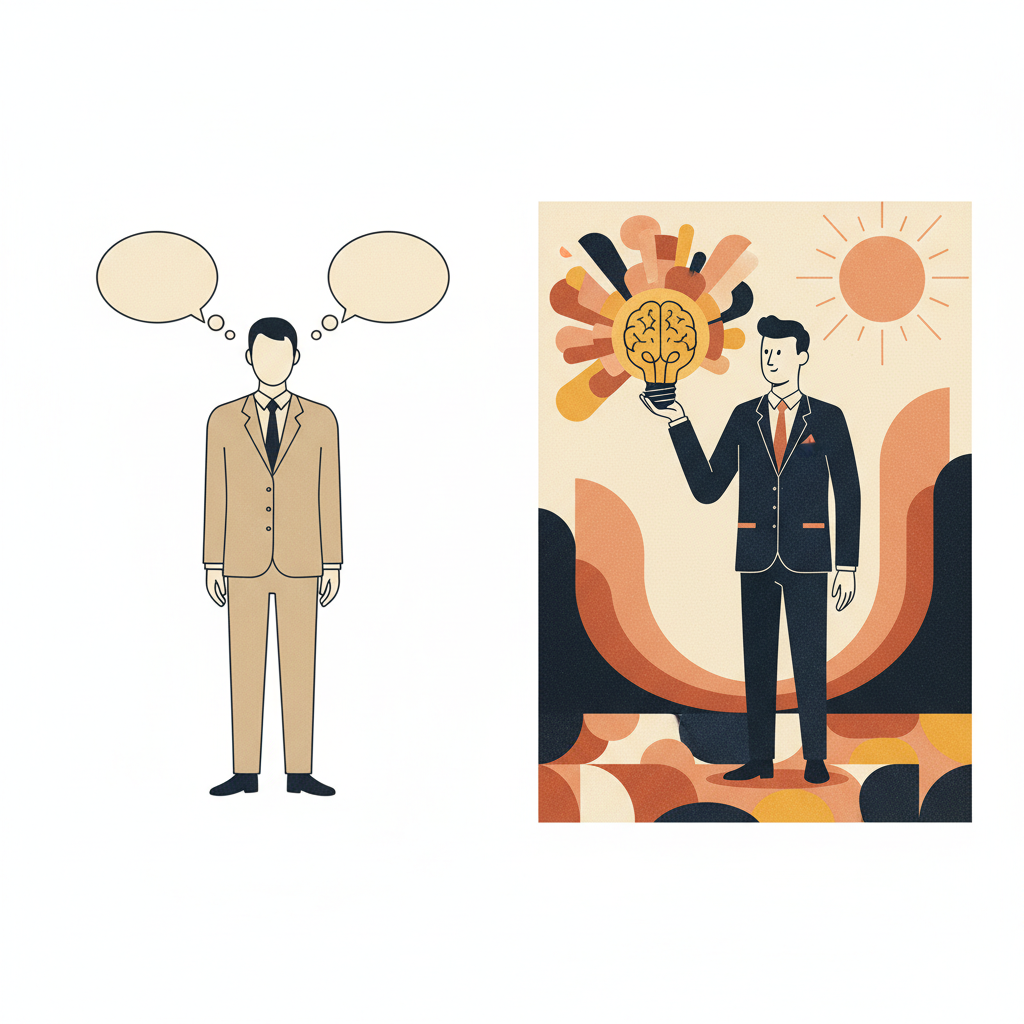
At the team level, taste docs solve the consistency problem that kills scaling organizations. Your CEO's strategic judgment lives in her head. Your VP Product's quality bar arrives as feedback too late to incorporate. Your brand voice guidelines are too vague for anyone - human or AI - to actually deploy. Your clinical director's care philosophy only reaches the team through hallway conversations.
Net-net - that's not a system. That's a single point of failure masquerading as leadership.
How to build a shared taste layer for your team: Create a Notion database called "Taste Docs" with columns for Domain, Owner, and Last Updated. Have each senior person write their taste doc using the format above - 10-15 specific rules. Organize by layer: Company Taste (brand, strategy, quality bar), Team Taste (how each function makes decisions), Individual Taste (personal alpha). Connect the Notion workspace to Claude via MCP. Now every team member's AI draws from the full taste stack. A new PM's first brief matches the org's quality bar because the context carries it automatically.
Picture this. A new PM joins on Monday. By Wednesday, her first brief sounds like it was written by someone who's been at the company three years. Not because she's a prodigy, but because the AI she's working with carries every quality bar your senior PMs spent years developing. That's not onboarding - that's teleportation.
Think about what that does to the economics of your team. Traditional onboarding cost: 3-6 months before a new hire is fully productive, a senior mentor burning 20% of their week guiding the newcomer, and a quality drop on everything the newcomer touches in the first quarter. Annualized cost of that ramp: $80-150k per hire, easy. A shared taste layer compresses ramp from months to weeks, eliminates the senior mentor drag, and holds the quality bar from day one. You just turned a recurring cost center into a fixed-cost asset. That's not a productivity story. That's a reorganization of how human capital actually scales inside a company. The firms that do this first will operate on a cost structure their competitors literally cannot match.
A shared taste infrastructure changes the economics entirely. When the team's AI draws from documented principles - strategic frameworks, hiring rubrics, product quality bars, design standards, voice guidelines, pricing philosophy, clinical protocols - every output starts from the same baseline. Consistency without bottlenecks. That's the unlock.
One team built what I'd call a capital stack - three layers of taste, each one compounding on the next:
- Company taste - brand, strategy, quality standards that apply to everything. The foundation layer.
- Team taste - how product evaluates opportunities, how engineering defines "done," how product design makes decisions about users, flows, and aesthetics, how clinical approaches care documentation. The execution layer.
- Individual taste - personal judgment that layers on top. The PM who's particularly strong on pricing. The product designer with refined opinions about information architecture and interaction patterns. The engineer who's the expert on performance patterns. The clinical lead with the best patient communication instincts. The alpha layer.
The AI deploys all three simultaneously. A new PM's first AI-assisted brief matched the team's quality bar because the context carried the organization's collective judgment. A new clinician's documentation reflected the care philosophy from day one. Like giving a rookie a championship playbook - they play at a higher level immediately.
The result: taste scales without bottlenecks. No more "run it by the founder first" - the founder's strategic judgment is in the system. No more "check with brand" - brand voice is encoded. No more "have the clinical director review it" - her care standards are built in. The team produces consistent work at 3x the speed because the quality bar is financialized into the tools, not locked in one person's calendar. And the leaders whose calendars just cleared? They're not filling them with more reviews. They're investing in the deep strategic work, the hard creative problems, and the craft that actually differentiates the company. The speed unlocks time. The time unlocks depth. That's derisking quality at scale while simultaneously raising the ceiling on what your best people can accomplish.
Here's the thing about breadth. When a startup encodes only design taste, they get consistent UI and inconsistent everything else. When they encode strategy taste, product taste, hiring taste, voice, clinical taste, and design taste - every function produces work that carries the organization's judgment. That's the difference between a team that uses AI and a team that's compounding through AI.
What's stopping you from running a "taste week" at your company starting Monday? Not budget - the tools cost less than coffee. Not time - 90 minutes per leader is the entire ask. The blocker is the false belief that taste is too intuitive to write down or that "everyone knows what good looks like here." They don't. Test it: ask three of your senior people to define "good" for the same deliverable. You'll get three answers. Now imagine your AI trying to hit a quality bar nobody can articulate. Run the week. Force the articulation. The week you do it is the week your team's output starts compounding instead of drifting.
Where This Applies
The through line is scale economics: the more specific your taste documentation, the more your AI output diverges from generic. Every domain. Every function. No exceptions.
A founder encoded his strategic decision-making framework - how he evaluates market opportunities, sizes bets, decides when to pivot vs. persevere. AI now drafts board materials that reflect his actual strategic thinking. Not consultant-speak. His thinking. The ROI on that documentation session is infinite because it compounds across every board deck for the life of the company.
A product manager documented her prioritization taste - how she weighs customer pain against business value, her threshold for "enough evidence," how she frames trade-offs for engineering. Sprint planning briefs now start 80% of the way to final. That's reclaiming 4 hours per sprint, every sprint, forever.
An operations leader documented her process evaluation judgment - what "good enough" means for different process types, when to automate vs. keep manual, her escalation philosophy. AI process recommendations now match her standards without a round of corrections. One-and-done.
An engineering lead encoded his architecture review criteria - what makes a design "too clever," when to optimize vs. ship, how to evaluate build-vs-buy decisions. Junior engineers' AI-assisted proposals now match his quality bar. That's underwriting the quality of every technical decision across the team.
A clinical leader encoded her documentation standards, patient communication tone, and risk assessment framework. AI-assisted notes now reflect her care philosophy - compliance flagging dropped 80% because quality was built in from the start.
A creative director at a consumer brand agency wrote down the 20 specific rules she uses to evaluate a concept: whether it earns attention in 3 seconds, whether the tension is visible without a caption, whether it uses a premium visual vocabulary or a stock one, whether it feels inevitable or forced. Her AI now generates concept directions that land squarely inside her taste zone on the first pass. Her team's concept-to-approval cycle compressed from 9 days to 2. But the more interesting outcome: clients started asking how her agency was producing work that felt this consistent across 6 different creatives. The answer was that every creative was now starting from the same quality floor - the floor her taste doc established. The agency's win rate on new business pitches jumped. The taste doc turned into a competitive moat the competitors couldn't see and couldn't replicate.
Specificity is the moat. Strategy, hiring, product, design, engineering, operations, clinical care - every domain where your judgment matters. Full stop.
Where This Connects
Taste documentation is how you turn a knowledge base from a reference library into an opinionated decision engine. Raw knowledge is facts and data - necessary but commodity. Taste is your interpretation of what those facts mean and how they should influence action. Knowledge provides context. Taste provides judgment. Together, they produce AI output that's not just informed but opinionated - in the way that makes your work defensible and your position irreplaceable.
Knowledge without taste is a Wikipedia article. Taste without knowledge is guessing. Either without you directing AI is noise at scale. The builder who deploys all three - their ongoing judgment, their knowledge store, and AI as an extension of their craft - creates something no competitor can replicate. You're not outsourcing your differentiators. You're compounding them. That's the whole game.
Examples How Others Have Made This Real
These aren't hypotheticals. Real builders and organisations are encoding taste into AI right now - and the results speak for themselves.
Airbnb's design team maintains a living document of design principles so specific that AI tools can reference them: "Illustrations use a warm, hand-drawn quality. Photography shows real spaces with natural light. UI copy is conversational, never corporate." That specificity is why Airbnb's AI-generated design explorations feel like Airbnb - not like a template.
Basecamp / 37signals has decades of opinionated product philosophy documented publicly - "build less," "charge from day one," "meetings are toxic." When their team uses AI for product strategy or copy, those principles aren't vague values. They're specific, deployable judgment calls that shape every output. The taste doc is the company.
Figma's Config talks revealed that top design teams encode not just visual style but product thinking - "progressive disclosure over feature density," "information architecture mirrors the user's mental model, not the database schema." Teams that feed this into AI design tools get UX solutions, not just UI layouts.
Notion's internal writing guide goes far beyond "be clear." It specifies voice characteristics, sentence structures to avoid, and how to frame feature announcements versus educational content. Their AI-assisted content starts from that taste layer - which is why Notion's communications feel consistent across hundreds of team members.
Custom GPTs and Claude Projects - thousands of professionals have built AI configurations loaded with their personal taste docs. A product strategist with 15 rules about positioning. A brand designer with 40 visual principles. A hiring manager with specific interview evaluation frameworks. The pattern is the same: document specificity, connect it, and the 45-minute rewrite tax disappears.
Duolingo encoded their character voice guidelines - playful, encouraging, slightly cheeky - so precisely that AI-generated lesson content matches the tone that took their content team years to develop. New writers' AI-assisted drafts sound like Duolingo from day one because the taste is in the system.
Ask Yourself
These questions will expose exactly how much of your judgment is locked in your head - and how much leverage you're leaving on the table.
Can you articulate 10 specific rules for your domain right now? Not vague principles like "I value quality." Specific, actionable rules - the kind you'd give a sharp new hire on their first day. If you can't write them down in 15 minutes, your AI definitely can't access them. See how knowledge becomes career capital →
When AI drafts something for you, how much time do you spend rewriting it to sound like you? That rewrite time is the tax on undocumented taste. 45 minutes fixing tone, framing, and judgment calls - every single time. That's not AI's fault. It's a documentation problem.
Does your team have a shared definition of "good"? When the PM says "this brief is done" and the product designer says "this solution is done" - are they measuring against the same bar? Or does quality only exist in the head of whoever reviews it? Explore how teams share context →
Where is your organization's taste documented - if anywhere? Brand voice guidelines that say "be clear and professional" are useless. Taste docs that say "we always frame opportunities as customer pain points first, TAM second" are powerful. Which kind do you have?
How many layers does your taste system have? Company taste, team taste, individual taste - each layer makes AI output more specific. If you only have one (or zero), every AI interaction starts from the same generic baseline. See how the full framework connects →
What domain of your judgment would you encode first? Strategy? Hiring? Design? Pricing? Product quality? The one that makes you cringe most when AI gets it wrong - that's where you start.