
The first question almost everyone asks AI is the wrong one.
What can I stop doing? What can we cut, remove, hand off, automate? It's the natural instinct, and it's the one every vendor deck trains you to have. It's also the smallest game on the board - call it 10 to 20% of what AI is actually worth to you. And here's the cruel part: it's the hardest 10% to ever get into production.
Think about why. An automation that's right 90% of the time isn't 90% done. It's a liability you have to babysit, because the 10% it gets wrong is invoices, or diagnoses, or customer trust - and now you need a human watching the machine that was supposed to replace the human. Most automation projects die in that last mile. The demo works. The rollout doesn't.
The other 80% has a name nobody leads with: elevation. Not doing your job faster. Doing work your job never contained. And the part almost nobody reaches - doing work you don't yet know is possible.
Here's the frame for this whole piece. Everything you believe you can do sits inside a box. The walls of that box got built by constraints - your time, your headcount, your tools, what your machines shipped with, what a "normal" person at your level is allowed to attempt. Automation polishes the inside of the box. Elevation redraws the walls. And the most valuable wall is the one you can't see, because it hasn't moved in your entire career, so you've mistaken it for physics.
And here's the part that should keep you up at night: understanding elevation doesn't mean you can see your own walls. You can finish this article nodding along and still walk back to your desk and miss the biggest moves available to you - because you can't elevate past a limit you don't know is there. The most valuable constraints aren't the ones you complain about. They're the ones you've never once questioned, because they were built into your profession long before you arrived - in an era that never imagined you'd have this much context and capability sitting at your desk. Your field drew its boundaries for a version of you that didn't have any of this. Those boundaries are still standing. Most of them are now optional. And almost nobody is looking, because the whole point of an assumption that old is that it stopped feeling like a choice.
That last wall is where the money is. It's also why most people never get there. Let me show you the whole board.
┌──────────────────────────────────────────────────────────────────────┐
│ │
│ ● AUTOMATION (what can we cut?) ● ELEVATION (what's possible?) │
│ │
│ Value: 10-20% Value: 80%+ │
│ Ceiling: your current process Ceiling: none found yet │
│ Failure: 90% right = a liability Failure: 80% right = new power│
│ Hardest: getting it to SHIP Hardest: letting yourself │
│ IMAGINE it │
│ │
│ ─ ─ ─ ─ ─ ─ ─ ─ ─ ─ ─ ─ ─ ─ ─ ─ ─ ─ ─ ─ ─ ─ ─ ─ ─ ─ ─ ─ ─ ─ ─ ─ ─ │
│ │
│ THE BOX OF THE POSSIBLE │
│ │
│ inside the box ──→ AUTOMATE (polish what you already do) │
│ stretch the box ──→ ELEVATE (do more, higher, wider) │
│ the wall you can't see ──→ UNKNOWN UNKNOWNS (the real prize) │
│ │
└──────────────────────────────────────────────────────────────────────┘
Automation Is the Small, Hard Game
Automation is bounded by definition. It can only ever touch work you already do. The absolute ceiling on an automation play is your current process, executed at zero marginal cost. That's it. You will never automate your way to something you weren't already doing.
And the economics are upside down from what people assume. Automation's value is capped and its failure is expensive. Elevation's downside is small and its upside is uncapped. A new capability that works 80% of the time is still a capability you didn't have yesterday - the 20% it misses costs you nothing, because the alternative was zero. But an automation that works 80% of the time inside a process you depend on is a fire you now have to watch.
Run the two bets side by side. The automation bet: spend six months and real capital to maybe shave 15% off a cost line, if you can get the reliability up, which you probably can't without a team. The elevation bet: spend an afternoon and discover your team can now do something the org assumed required a whole department. One of these is a rounding error. The other resets the baseline. Most companies pour their AI budget into the rounding error and call it strategy.
This isn't an argument against automation. Automate the obvious stuff - it's real, it's just small. The mistake is stopping there, treating the 10% as the whole opportunity, and never asking the bigger question. Because the bigger question is where every dollar of durable value lives.
Elevation Is Two Moves
Elevation comes in two flavors, and most people only ever attempt the first.
The first move is doing more, higher, wider. Operating at a scope or a level of quality your role or your discipline couldn't reach before. The designer who now shapes positioning. The junior engineer who now owns architecture. The eight-person team producing what used to take thirty. That's the elevation play, and an entire article could be written about it - one has been. But it's still elevation in a known direction. You knew the penthouse existed. You just got the keys early.
The second move is the one that actually changes things. It's redrawing the assumptions about what's possible at all. Not a longer lever on the same machine - a different machine. Not "I can now do the VP's job," but "the thing we always treated as impossible is suddenly Tuesday." This is rarer, harder, and worth ten times the first, because it doesn't move you up the existing ladder. It changes where the ladder leads.
Here's what people miss. The second move doesn't announce itself. Nobody hands you a memo saying "this constraint is now optional." The constraint just quietly stops being real, and unless you're actively hunting for it, you keep planning around a wall that isn't there anymore. The rest of this piece is about training your eye to see those walls. Let me make it concrete.
What Elevation Looks Like in a Single Day
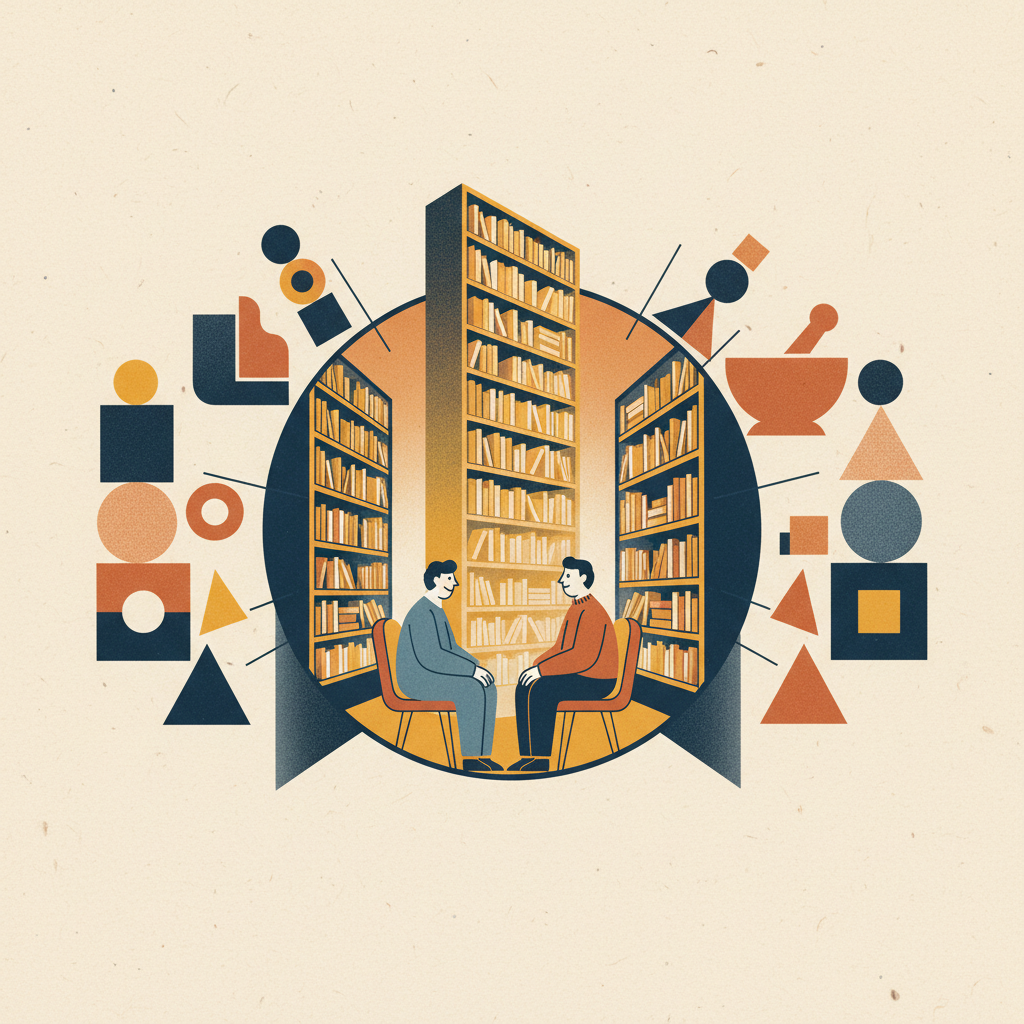
Take a doctor's day. The automation story is the one everyone tells, and it's boring. An ambient scribe listens to the visit and writes the note. The doctor saves a few minutes per patient. Nice. Genuinely useful. Completely uninteresting.
Now the elevation story. The care team walks into the room already holding the patient's entire longitudinal history - every prior visit, every lab trend, every medication interaction - synthesized, not buried in a PDF nobody opens. They walk in holding the relevant literature for this exact presentation. They walk in with the differential laid out across plausible pathways, each one costed against this patient's access, insurance, and actual ability to follow the plan. That is not a faster note. That is a different quality of medicine.
The doctor's judgment is still the product. But that judgment now gets applied with the context of a research team, a pharmacist, and a care coordinator standing in the room - except they fit inside a context window, and they're available for every patient, not the lucky few. The encounter got elevated. The twelve-minute appointment now carries the preparation of an hour.
Then comes the real prize, and it has nothing to do with speed. Hand the preparation and the recall to the AI and you don't get a faster appointment - you get a physician with the room to be a great one. The mental load that used to go into reconstructing the history and chasing the literature is freed for the things only a human does: hearing the worry underneath the patient's words, catching the symptom they were too embarrassed to lead with, staying in the hard conversation instead of rushing it. The doctor gets to be more creative about the diagnosis, more present in the room, more genuinely caring - because the machine carried the weight that was crowding all of that out. That is the elevation - not a cheaper visit, but a doctor operating at the top of their license. It changes how they wield their skills, pointing a decade of training at the calls that need it instead of the busywork that buried it. It changes how the work feels - closer to why they went into medicine in the first place. And it changes the outcomes they can generate, for themselves, for their patients, and for the system around them. None of which any automation roadmap ever thought to optimize for.
When the Whole Business Fits in the Context Window
Scale that up to an organization and it gets stranger.
Picture a team of six. Every contract the company has ever signed, every customer call, every ops metric, every post-mortem, every strategy doc anyone ever wrote - all of it sits in context, queryable, synthesizable. Now that team can summon a proposal that's normally three departments and an outside consultant away. A pricing overhaul that correctly accounts for the contractual edge cases legal would have flagged. A market-entry plan that reflects what the support tickets have been screaming for two years. At a breadth and quality no one on that team could have produced alone, in a fraction of the time.
Sit with what that does to the assumptions. If a six-person team can routinely produce board-grade strategy across domains they've never formally owned, what is the business, exactly? What is the org chart for? The quiet premise of almost every company - that strategy lives two levels up, that cross-functional work requires the actual functions to be in the room - just took a body blow. Not because anyone automated a task. Because the constraint that made the org chart necessary got removed, and the org chart is now a habit, not a requirement.
This is the uncomfortable shape of real elevation. It doesn't make your existing structure more efficient. It makes you question whether the structure was ever the point. The teams that win the next decade are the ones willing to ask that question out loud - before a competitor asks it for them.
You Can Build Software Now
Here's the single biggest assumption AI just made optional, and almost nobody has fully absorbed it: you can build software now.
For your entire career, "we'd need to build software for that" was a full stop. It meant a budget you didn't have, a vendor you'd have to manage, a nine-month roadmap, an engineering team you couldn't get headcount for. So the idea died on contact. Worse - and this is the part that matters - you stopped having the ideas at all. When a capability is permanently out of reach, your brain quietly stops generating the desire for it. The constraint didn't just block the work. It amputated the imagination.
That wall is gone. People who have never written a line of code are building real, working tools. And the value isn't just "cheaper software." It's that whole categories of work suddenly open up. Prototyping, because you can show the thing instead of describing it. Storytelling, because an interactive demo lands in a way a slide deck never will. Internal tools that were never worth a ticket. Extensions to the software you already pay for. Glue between two systems that have refused to talk to each other for a decade.
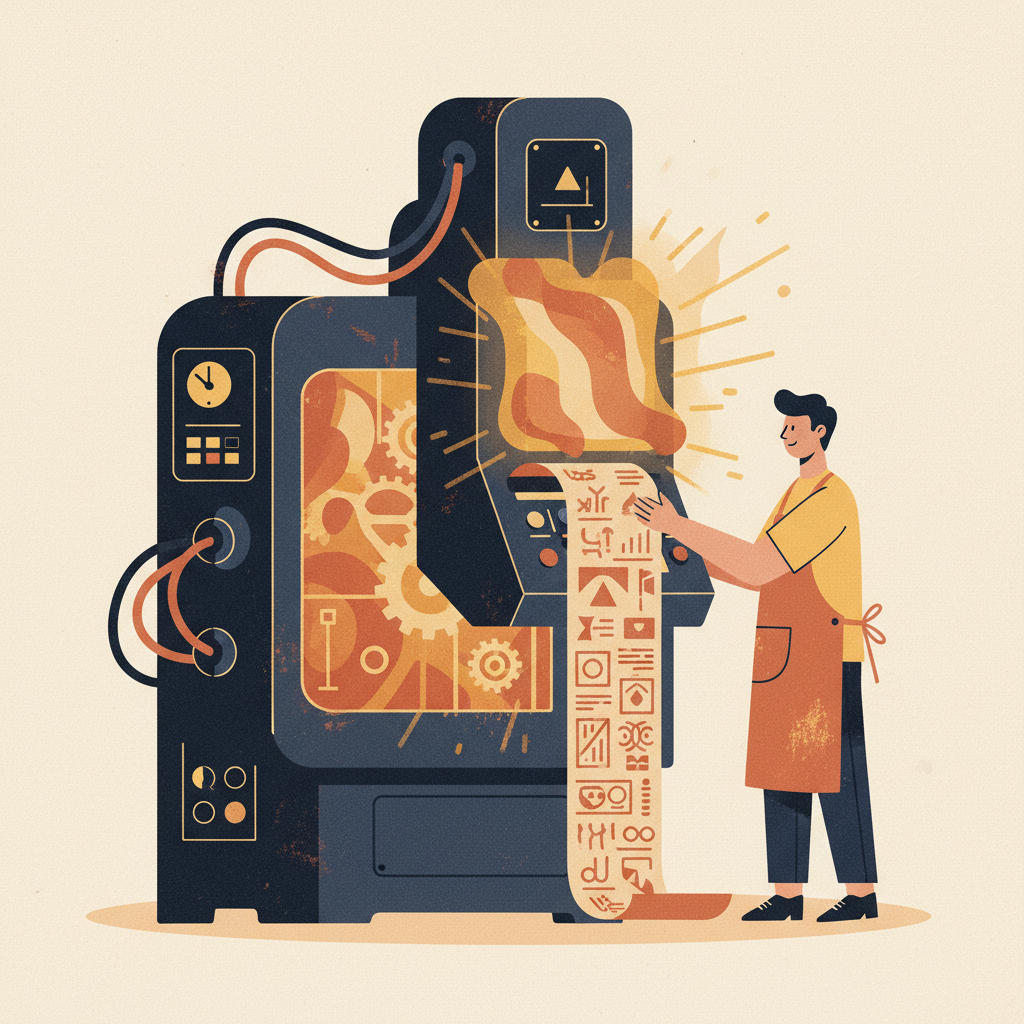
Let me give you the example that made this click for me. A woodworking factory I know ran older CNC machines behind rigid, decade-old software. Everyone assumed modernizing meant ripping the machines out and buying new ones - capital they were never going to spend. So they lived inside the limits. For years.
Then they used Claude to connect to the old machines and extend the existing software interfaces. Two things happened. They modernized the tooling without replacing a single machine. And their operators could suddenly feed in instructions far more complex than the original interface had ever allowed - jobs the machines were physically capable of the whole time, walled off by a form somebody designed a decade ago.
Sit with that, because it's the whole article in one story. The machines didn't change. The factory's belief about what the machines could do changed. The limit was never the steel. It was an assumption frozen into a software interface, one the floor had accepted as a law of nature. The moment someone questioned it, capacity that had been sitting there - paid for, for years - just switched on.
Now ask the obvious question. What's your old software interface? What's the form in your business, designed years ago by someone long gone, that quietly decides what your people are allowed to express? Every legacy system you own has assumptions baked into it that you now treat as physics. AI is a universal adapter for those frozen assumptions. That's not a tooling upgrade. That's a way to switch on capacity you already paid for.
The Hardest Skill: Finding Your Unknown Unknowns
So here's the punchline, and it's also the hard part.
The bottleneck on elevation is not the AI. The models are already more capable than your use of them. The bottleneck is imagination trained by old constraints. You can only ask for capabilities you can conceive of, and your entire professional life has trained you to conceive of exactly the things that were achievable under the old limits - and to never even form a desire for the things that weren't. Those un-formed desires are your unknown unknowns. They're the highest-value real estate you own, and you can't see them, by definition.
You can't search for what you can't name. So you need a method that hunts for the walls instead of the openings. Here's the one I use.
Hunt the language of surrender. Every operation is full of phrases that mark a frozen assumption: "we just live with that," "that's not how it's done here," "we'd need a whole team for that," "the system won't let us," "that's above my pay grade." Each one is a fossil - a constraint someone accepted so long ago it stopped sounding like a choice. Write them down. Interrogate every single one. Half of them are no longer true.
Find the humans acting as glue. Look for every place a person is moving context from one system to another, translating between two teams, or carrying knowledge in their head because there was nowhere else to put it. That's not labor waiting to be automated - it's a seam where elevation hides. The glue work exists because a connection used to be impossible. It probably isn't anymore.
Ask the free-constraint question. Take the constraint you complain about most and pretend it's free. If headcount were free, what would you build? If you could read everything, what would you decide? If software were free to make, what would you make? Then check which of those constraints actually just became free. You'll find at least one.
Audit your tools for frozen assumptions. The woodworking lesson generalizes. Every interface, every form, every handoff in your business encodes someone's old assumption about what's worth allowing. Go looking for the fields that don't exist, the inputs the system rejects, the reports nobody can run. Those absences are a map of your unknown unknowns.
Borrow other disciplines' impossible. The fastest way to spot your own frozen assumptions is to look at what an adjacent field treats as routine that you treat as out of reach. Cross-pollinate aggressively. Your industry's "can't" is often another industry's "obviously."
And do this on a schedule, not once. The frontier moves every month. The capability that was genuinely impossible in January is shipping in June. An assumption you correctly retired last quarter has three new neighbors this quarter. Make finding your unknown unknowns a ritual, because the box keeps getting bigger whether you look or not - and the people who look are the only ones who get to use the new room.
The box you're working inside was drawn by constraints that, in many cases, no longer exist. That's the opportunity and the trap in one sentence. Everyone has the same models in the same browser. The difference between the people who capture 10% and the people who reset their entire industry is not access. It's whether they keep optimizing inside the box or go looking for the wall that isn't load-bearing anymore.
So don't spend this quarter automating a task. Spend it finding one wall you assumed was permanent, and pushing on it. The factory didn't need new machines. It needed a new assumption. Go find yours - then walk straight through it.
Ask Yourself
These questions are built to surface the walls you've stopped seeing.
When you brought AI in, was your first question "what can we cut?" or "what becomes possible?" The first is automation - real, but small and hard to ship. The second is where the value lives. Which one did your last AI conversation actually center on? See the elevation play in depth →
Can you name three things your team does today that it assumed required a vendor, a budget, or a department it doesn't have? If you can't name three, you're still operating inside the box. The goal is to name them faster than the constraint can reassert itself.
Where in your work is a human acting as glue - moving context, translating, carrying knowledge in their head? Those seams exist because a connection used to be impossible. Most of them aren't anymore. See how to widen the context you decide with →
What's the "we just live with that" you've stopped questioning? Every operation has one. Say it out loud in your next team meeting and watch how fast someone realizes it's no longer true.
What old system or interface in your business has assumptions frozen into it that you treat as physics? That's your woodworking machine. The capacity is probably already paid for, sitting there, waiting for someone to question the form. See how the knowledge foundation makes this real →
If the constraint you complain about most were suddenly free, what would you attempt? Write the answer down. Then check whether that constraint just quietly became free. See how teams turn this into shipping speed →